AI Candidate Matching: The Complete 2026 Guide
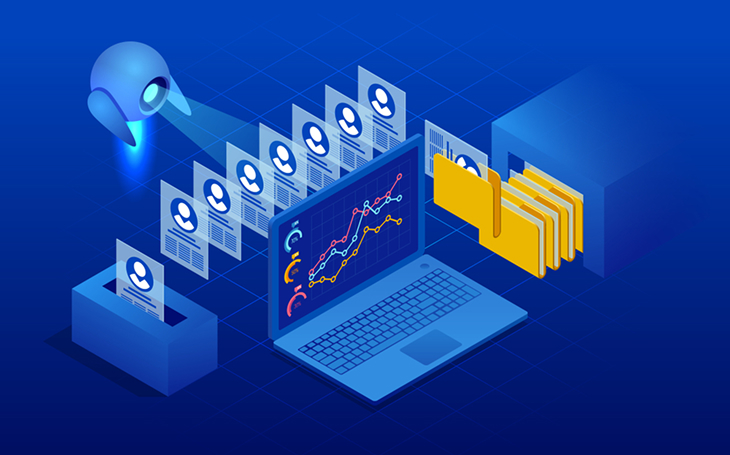
AI candidate matching uses machine learning and natural language processing to automatically screen resumes, score applicants, and rank them by job fit—replacing hours of manual review with seconds of automated analysis. The technology goes beyond simple keyword filters to understand context, recognize transferable skills, and surface candidates that traditional ATS systems would miss entirely.
This guide covers how AI matching works, what to look for in a platform, and how to implement it without disrupting your existing workflow.
What is AI Candidate Matching
AI candidate matching uses machine learning and natural language processing to automatically analyze resumes, rank applicants, and connect job seekers with open positions—a technology now used by 43% of organizations for HR tasks in 2025. Unlike old-school keyword filters, AI matching understands context—so a "Python developer" and a "software engineer with Python experience" get recognized as the same skillset.
The technology typically cuts time-to-hire by 30-50% because it handles the heavy lifting of initial screening. Instead of manually reviewing hundreds of resumes, you get a ranked shortlist in seconds.
Here's what powers the system:
Machine learning algorithms: Study patterns from past successful hires to predict which candidates will perform well
Natural language processing (NLP): Reads and understands meaning, not just exact keyword matches
Candidate scoring: Assigns numerical rankings based on job fit so you can compare applicants objectively
The bottom line? You start with qualified candidates instead of a pile of unknowns.
Why Traditional Resume Screening No Longer Works
Ever spent an entire afternoon sorting through 200 resumes only to realize you're still not sure who to call first? That's the reality of manual screening—and it's breaking down.
The problem isn't effort. It's consistency. One recruiter spends 7 seconds per resume while another spends 30. Criteria shift based on fatigue, time pressure, or how many applications landed that morning. Two equally qualified candidates get completely different treatment depending on when their resume hits the pile.
Legacy ATS keyword filters create a different headache. They reject candidates who use synonyms, non-standard formatting, or unconventional career paths—a problem 99% of Fortune 500 companies are now addressing with automation. A "Full-Stack Developer" gets filtered out because the job post said "React/Node.js Engineer"—even though the skills match perfectly.
When a single role attracts 250+ applicants, manual review becomes the bottleneck that delays everything downstream: interviews, offers, and start dates.
How AI Candidate Matching Works
Understanding the mechanics helps you evaluate platforms and set realistic expectations. The typical workflow breaks into five stages.
1. Job requirement analysis and data extraction
First, the system parses your job description. It identifies required skills, preferred experience levels, certifications, and soft skills embedded in the language.
LUCA Smartmatch handles this automatically—no manual tagging required. The AI builds a structured profile of what "good" looks like for each specific role.
2. Resume parsing and candidate profile building
Next, the AI extracts candidate data from resumes, LinkedIn profiles, GitHub repositories, and portfolios. It normalizes job titles, standardizes skill names, and fills gaps where possible.
Multi-source sourcing matters here. iFind pulls verified, up-to-date profiles from LinkedIn, GitHub, and other platforms with portfolios, social links, and company info. No outdated or fake profiles cluttering your pipeline.
3. Semantic matching and skill alignment
This stage separates AI matching from basic keyword filters. Semantic matching—the ability to understand meaning rather than just words—recognizes that related technologies and transferable experience count.
The system maps candidate skills against job requirements, accounting for skill adjacencies that a keyword search would miss entirely.
4. Candidate scoring and ranking
Algorithms assign match scores based on multiple hiring signals—often 30 or more data points. Candidates get ranked by fit, and you can see why each person scored high or low.
Transparency matters. If you can't explain a score to a hiring manager, the system isn't helping you make better decisions.
5. Feedback loops and continuous learning
The best AI matching systems improve over time. When you advance a candidate, reject one, or make a hire, that feedback trains the model.
This continuous learning separates AI matching from static filters. The system adapts to your preferences, your team's hiring patterns, and which signals actually predict success in your organization.
Benefits of AI Candidate Matching
What actually changes when you move from manual screening to AI-powered matching?
Faster time to qualified shortlists
Screening that took hours now happens in seconds. LUCA Smartmatch delivers 95% match accuracy in the time it takes to grab coffee.
You start with pre-qualified candidates instead of raw applicant pools. Faster shortlists mean faster interviews, faster offers, and faster start dates.
Higher match accuracy and candidate quality
AI evaluates fit across dozens of signals—not just keywords. Better shortlists mean fewer mismatched interviews and less time wasted on candidates who were never right for the role.
Lower screening costs and reduced recruiter workload
Automation replaces repetitive manual review. Teams report saving thousands of recruiting hours annually, freeing recruiters to focus on relationship-building and closing candidates.
Data-driven hiring decisions
Match scores and candidate insights replace gut-feel decisions. When a hiring manager asks "why this person?"—you have an answer backed by data, not intuition.
Reduced bias and stronger DEI outcomes
AI focuses on skills and qualifications, not names or backgrounds. When properly calibrated, matching systems help teams build more diverse pipelines by removing unconscious bias from initial screening.
Scalable recruitment without added headcount
Hiring surges don't require proportionally more recruiters. AI handles volume spikes while your team stays focused on high-value activities like candidate engagement and closing.
What to Look for in AI Candidate Matching Software
Not all platforms deliver the same results. Here's what separates effective tools from overhyped ones.
Match accuracy and scoring transparency
Can you see why candidates scored high or low? Explainable AI matters for trust, compliance, and hiring manager buy-in. Black-box scoring creates more problems than it solves.
Multi-source candidate sourcing
Does the platform pull from LinkedIn, GitHub, job boards, and your existing ATS? Broader sourcing means better pools. iFind delivers verified, up-to-date profiles with portfolios and social links—zero noise.
Automated outreach and candidate engagement
Can it generate personalized outreach and screening questions? LUCA iChat creates tailored messages in your tone, so you're not bouncing between tools to launch a campaign.
ATS and HR system integration
Seamless integration with existing tools prevents workflow friction. Look for API-first architecture and pre-built connectors to your current stack.
Talent market intelligence and salary benchmarks
Real-time market data helps calibrate offers and compete for talent. LUCA DFind provides salary benchmarks, DEI data, and competitor hiring insights—all in one click.
Data security and compliance
GDPR, SOC 2, and data privacy protections are non-negotiable when handling candidate information. Verify certifications before you commit.
How to Implement AI Candidate Matching
Adopting AI matching doesn't require a complete overhaul. Here's a practical path forward.
1. Audit your current screening workflow
Where does manual work slow you down? Document your current time-to-shortlist and identify the biggest bottlenecks. This baseline helps you measure improvement later.
2. Clean and prepare your candidate data
AI performs best with structured, accurate data. Remove duplicates, outdated profiles, and incomplete records from your ATS before integration.
3. Select and integrate your AI platform
Choose a platform that fits your hiring volume, integrates with your ATS, and offers the features outlined above. Prioritize platforms that combine sourcing, matching, and outreach in one system rather than forcing you to stitch together multiple tools.
4. Train your team and configure matching criteria
Recruiters benefit from understanding how to interpret match scores and refine criteria over time. AI augments recruiters—it doesn't replace them. The human judgment layer remains essential for final decisions.
5. Monitor results and optimize over time
Track metrics like time-to-shortlist, offer acceptance rates, and quality of hire. Use feedback loops to improve matching accuracy with each hiring cycle.
AI Candidate Matching vs Manual Screening
Here's how the two approaches compare across key dimensions:
Capability | Manual Screening | AI Candidate Matching |
|---|---|---|
Speed | Hours to days per role | Seconds to minutes |
Consistency | Varies by recruiter | Standardized scoring |
Bias risk | Higher (subjective review) | Lower (skills-focused) |
Scalability | Limited by headcount | Handles volume spikes |
Candidate experience | Slower response times | Faster engagement |
Data insights | Minimal | Rich match analytics |
The shift isn't about replacing recruiters. It's about removing the repetitive work that keeps them from doing what they do best—building relationships and closing great candidates.
Hire Smarter and Faster with Lookout AI
Everything covered in this guide—AI matching, multi-source sourcing, automated outreach, market intelligence, interview capture—comes together in one platform.
Lookout AI combines LUCA Smartmatch for 95% accurate candidate ranking, iFind for verified sourcing, iChat for personalized outreach, DFind for real-time market data, and NoteTaker for interview documentation. One system. No fragmented tools. No wasted time.
FAQs about AI Candidate Matching
For more common questions about AI-powered recruitment, visit our comprehensive FAQ section.
How accurate is AI candidate matching compared to manual resume screening?
AI matching typically outperforms manual screening in consistency because it evaluates every candidate against the same criteria without fatigue or variation, with machine learning improving shortlisting accuracy by 25%. Accuracy depends on data quality and how well the system learns from your hiring patterns—most teams see measurable improvement within a few hiring cycles.
Can AI candidate matching software evaluate applicants with non-traditional backgrounds?
Yes. Systems using semantic matching and skills-based analysis identify qualified candidates whose resumes don't follow conventional formats. This approach helps surface talent that keyword-based filters would automatically reject.
What happens when an AI candidate matching system makes a poor recommendation?
Most platforms include feedback mechanisms so recruiters can flag mismatches. That feedback trains the algorithm to improve future recommendations. Human oversight remains essential for final hiring decisions—AI handles the screening, you make the call.
How long does it take for recruiting teams to see results from AI candidate matching?
Teams often see immediate time savings in screening and shortlisting. Improvements in quality-of-hire metrics typically become measurable after a few hiring cycles as the system learns from outcomes and recruiter feedback.